
Legal blog
The right to adequate medical care in pre-trial detention: breach of Articles 3 and 5 ECHR and replacement of the preventive measure
 Av. Laurențiu Tudorache
A defendant with mental disorders received psychotropic treatment in pre-trial detention for 4 months on the basis of an expired medical letter. Relying on Articles 3 and 5 of the Convention, I obtained the replacement of pre-trial detention with judicial supervision.
Medical care for persons deprived of liberty who have been diagnosed with mental disorders is an extremely sensitive topic in the case-law of the European Court of Human Rights (ECHR). According to its settled practice, Article 3 of the Convention requires States to ensure that the health and well-being of detainees are adequately secured, and the lack of appropriate medical care may amount to inhuman or degrading treatment.
I recently relied on this reasoning in a complex criminal case.
Following my steps in the case, I asked the court to order the prison administration to disclose to the defence the treatment being administered to the defendant held in pre-trial detention, as well as the medical letter on the basis of which it had been prescribed.
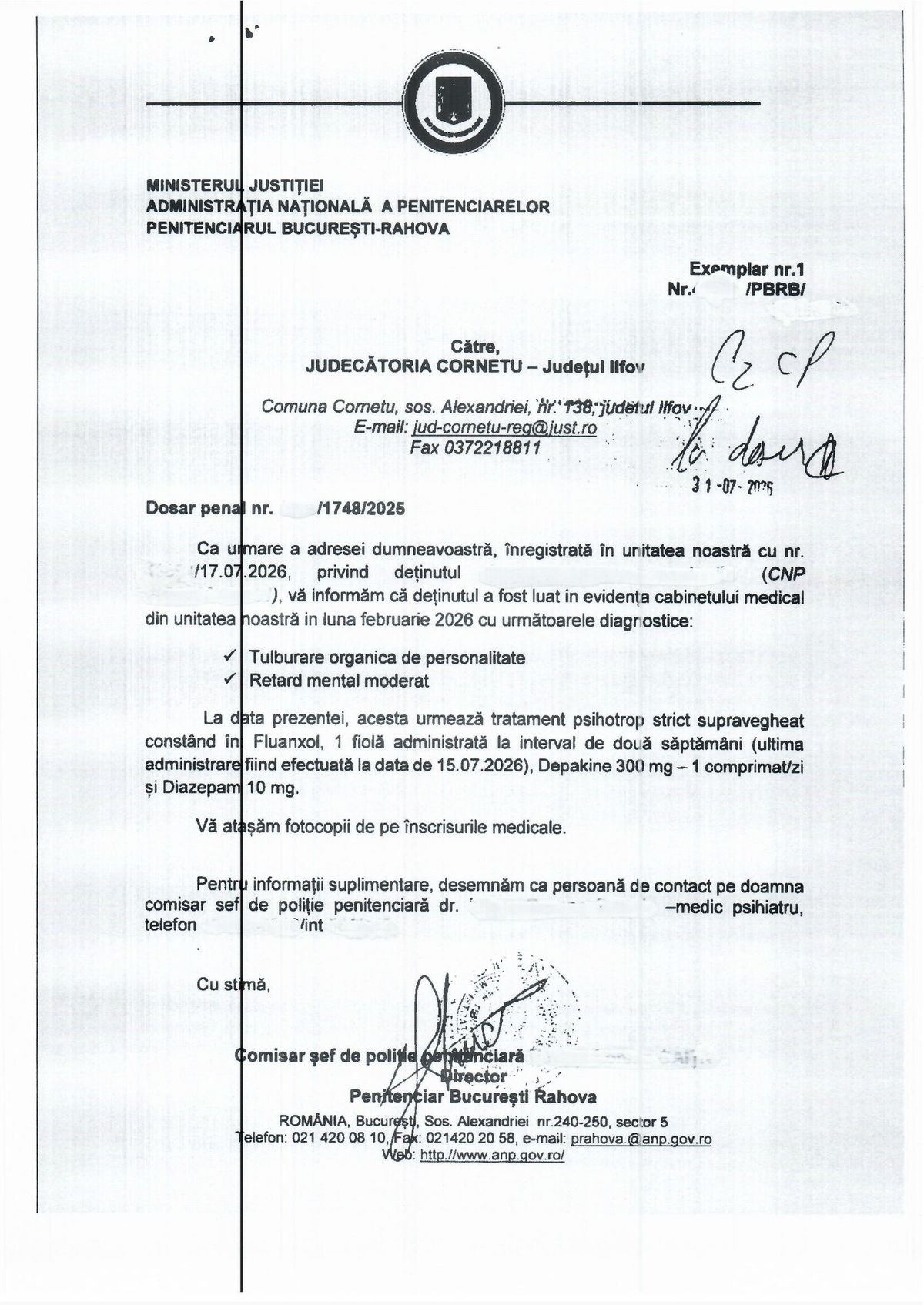
The documents provided by Bucharest-Rahova Prison showed that the defendant, diagnosed with an organic personality disorder and moderate intellectual disability, was receiving psychotropic treatment on the basis of a medical letter from December 2025 that was valid for strictly 6 months. By the time the preventive measure was reviewed (October 2026), the defendant had been treated for 4 months on the basis of an expired medical document, without being re-assessed by a specialist.
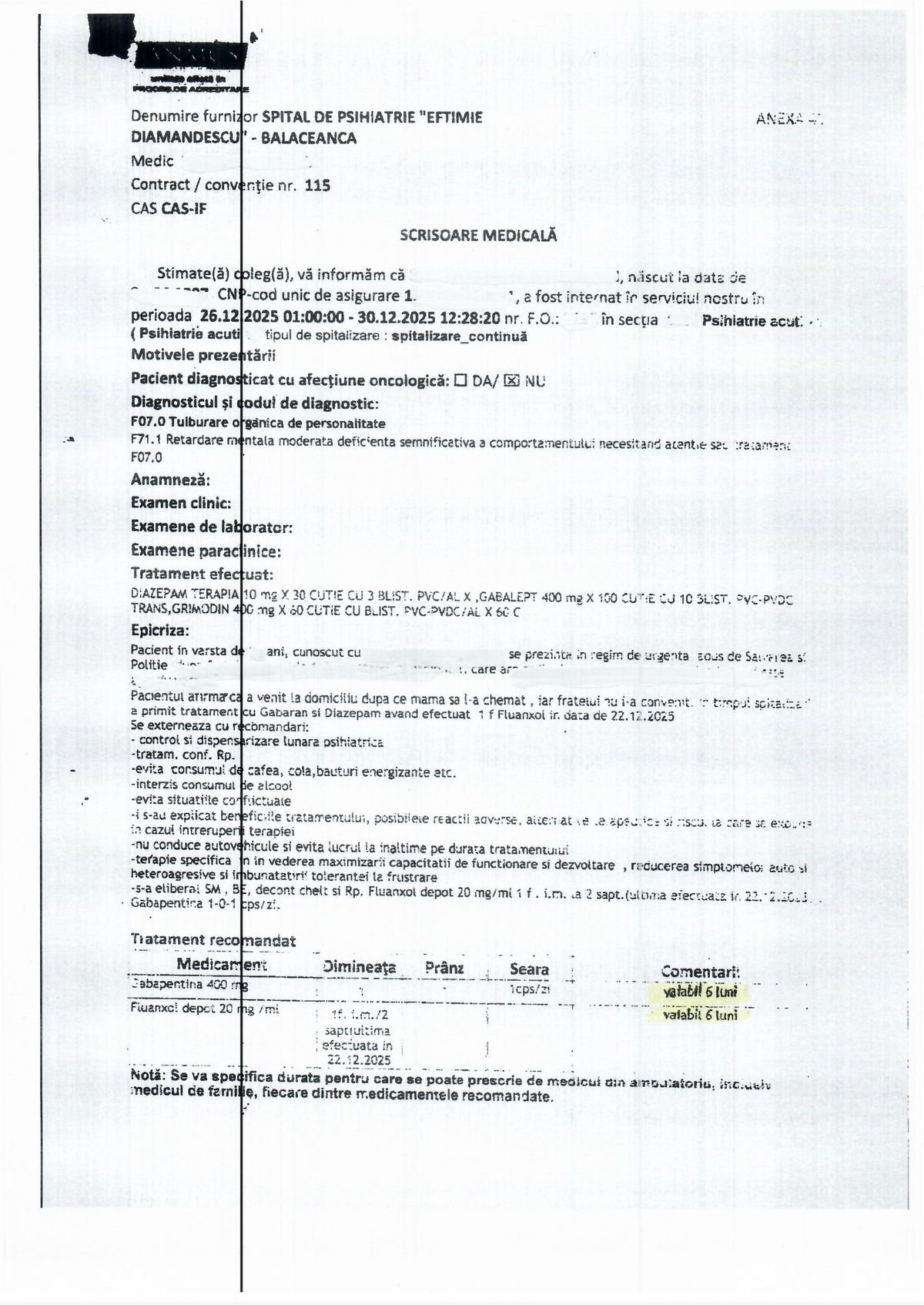
I pointed out to the court that the lack of periodic re-assessment directly undermines the success of the treatment and runs counter to the safeguards governing lawful deprivation of liberty (Article 5 ECHR). The court accepted the defence's arguments and replaced pre-trial detention with judicial supervision, while also requiring the defendant to undergo a specialist psychiatric consultation.
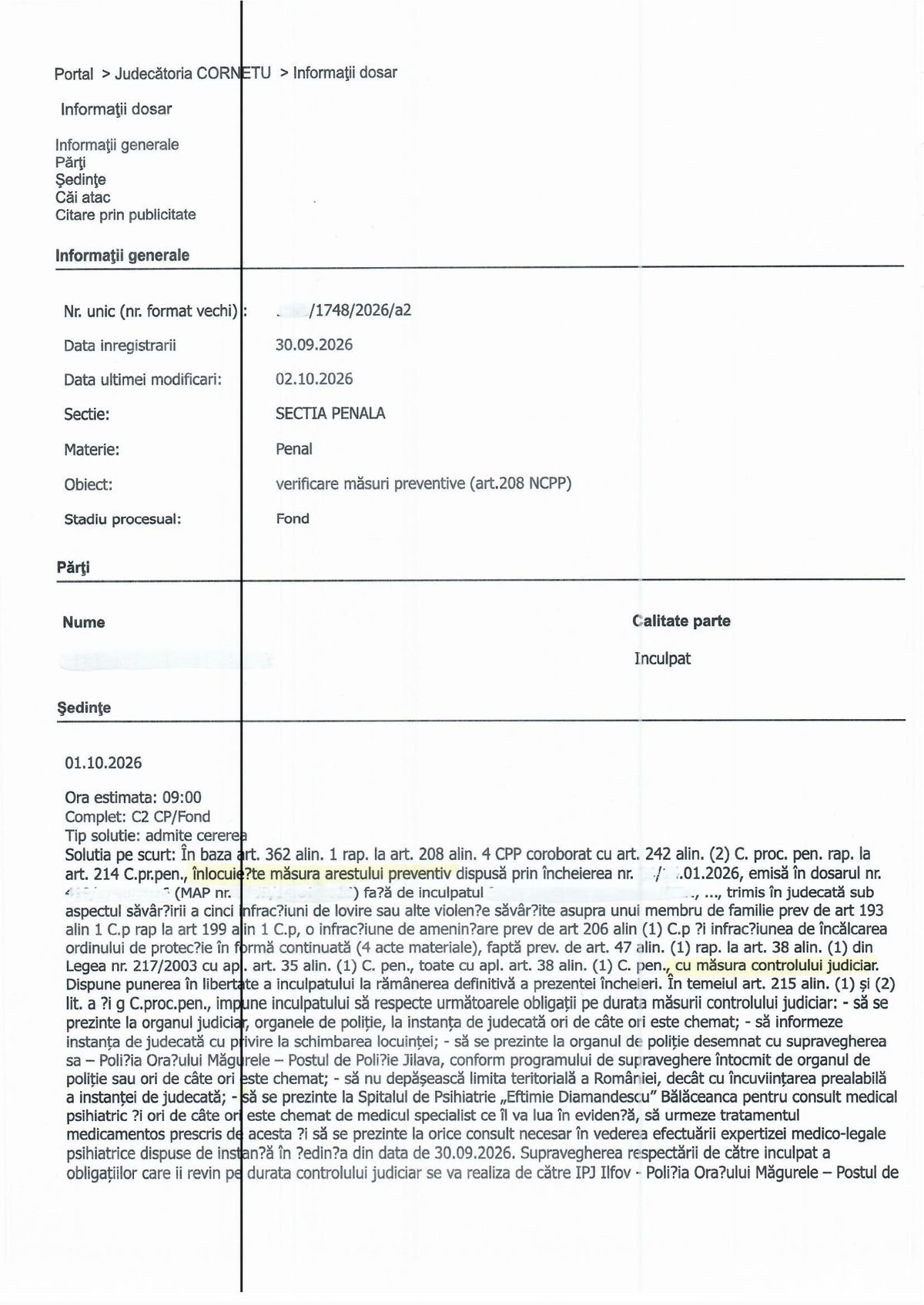
This decision reconfirms the importance of rigorously verifying conditions of detention and respect for fundamental rights in criminal proceedings.
Articles are for information purposes only and do not constitute legal advice for a specific case. For your situation, I invite you to a consultation at my office.